A playable classic · Charlotte Brontë, 1847
Take the pen in Jane Eyre
An interactive classic with a fixed world, canon characters, and three authored first pages. You decide what the next paragraph does.
Can I play or write a Jane Eyre story with AI?
Yes. Underfiction gives you Thornfield Hall, Edward Rochester, and three authored turning points, then hands you control of Jane’s choices in literary, scene-based prose.
The world premise
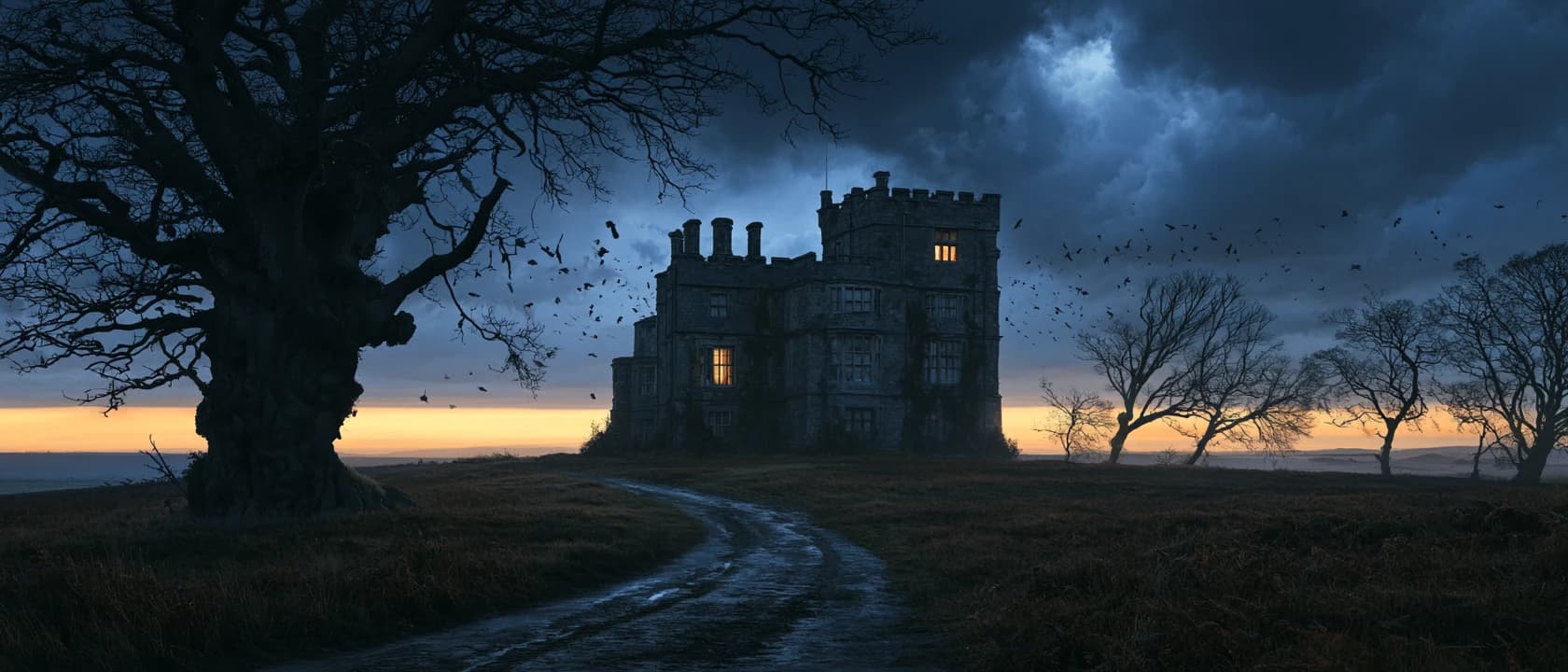
Thornfield Hall stands three storeys of grey stone against the edge of the moors, with battlements instead of ornament and a rookery instead of neighbours. It is a gentleman's house of the older, sterner kind — handsome the way a locked chest is handsome — and the county has long since stopped expecting anything of it. The master is abroad more than he is home; his comings are without notice and his goings without explanation, and the great rooms below stand shrouded in holland covers, waiting for a household that never quite assembles.
Mrs. Fairfax keeps the house — a kind, tidy widow who will tell you the history of every chair and change the subject with perfect placidity exactly once a day, always at the same point. Adèle, the master's little French ward, wants only an audience and a new frock, in that order, and no one will say whose child she is. Grace Poole sews alone in the third storey, drinks her porter, and is paid — Mrs. Fairfax lets this slip, then tidies it away — a wage no seamstress earns. And sometimes, along the third-floor corridor, there is a laugh: low, deliberate, mirthless, tracking overhead like footsteps on the ceiling of the house's composure. Grace Poole's, says everyone, in the voice of people repeating a lesson.
The days at Thornfield keep lesson-hours; the evenings keep the master's. When Mr. Rochester is home the drawing-room bell rings after dinner and attendance is not optional, and the fireside becomes an examination room where the questions are strange and the answers are marked for honesty. The third storey is locked. The battlements are not, and from them you can see the road to Millcote, which is the way out, and the moors, which are not a way to anywhere. Hay Lane runs below the hill, and at dusk it belongs to hoofbeats, ice, and things that happen suddenly.
Your position
You enter beside the canon
Here you occupy Jane’s position: the newly arrived governess with little money, no protective family, an independent will, and a talent for saying true things in a level voice. The story recognises the unequal ground beneath every conversation with Rochester. You can answer him, refuse him, investigate the locked third storey, leave Thornfield, or force a truth into the open earlier than the novel allows.
Canon characters in the story
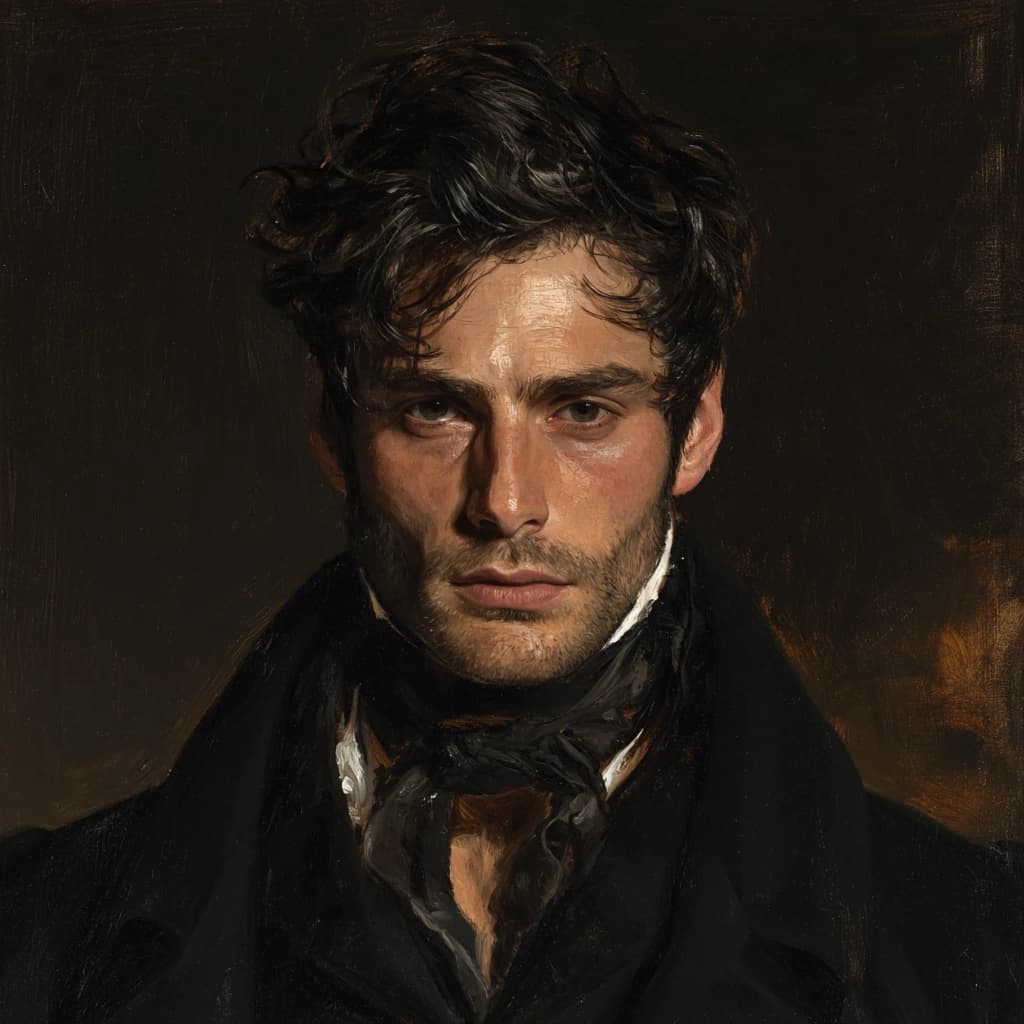
Edward Rochester
Master of Thornfield. Eight-and-thirty, broad-chested and dark, with a heavy brow, a grim mouth, and features nobody has ever called handsome twice — he knows it, invites you to say so, and is obscurely pleased when you do. He rides in from nowhere at dusk, fills the house like weather, and conducts conversation as interrogation: abrupt, commanding, jumping fences mid-sentence, demanding honesty and rewarding it with more of his attention than is comfortable. The moods are real — black fits of silence, sardonic gaiety, sudden gentleness that embarrasses him — and under all of them runs the same engine: a man of strong feeling and stronger appetites who made one catastrophic surrender in his youth, has been paying for it in guilt and locked doors ever since, and has roamed a continent trying to outrun the fact that it lives upstairs. He despises polish, having bought so much of it; he trusts nothing that flatters him. What arrests him is refusal — quiet, principled, unafraid — and once arrested he watches with the fixity of a starving man at a window, calling it employer's interest long past the point anyone believes him. He would rather be argued with than adored. He is planning something reckless, because he always is; this time he half believes it might save him.
Authored openings
These are written first pages, not generated prompts. Each begins at a different pressure point.
- 01
Midsummer, the Chestnut Tree
He let you believe he would marry another. Then you told him the truth of your heart — and he stopped walking.
With Edward Rochester
- 02
The Fire in the Master's Chamber
You doused him in his burning bed at two in the morning. He is holding your hand and will not let go.
With Edward Rochester
- 03
The Impediment
A stranger stood up at your wedding and said the words. Now the man at the altar is asking you to see for yourself.
With Edward Rochester
From the first opening
A real prose excerpt
The first page is written. The next move is yours.
Begin with Midsummer, the Chestnut Tree. Continue in prose, redirect the scene, or overturn the premise entirely.
Take the pen